How a 15-Person Industrial Manufacturer Grew Revenue 20% and Cut Sales Cycle 46% in 5 Months
Case study: TechForge Industrial stopped building pipeline manually across a 106K-SKU catalog. By learning their ICP and finding manufacturers that matched, they grew revenue 20% ($1.7M) and cut sales cycles from 52 to 28 days — same team, zero new hires.
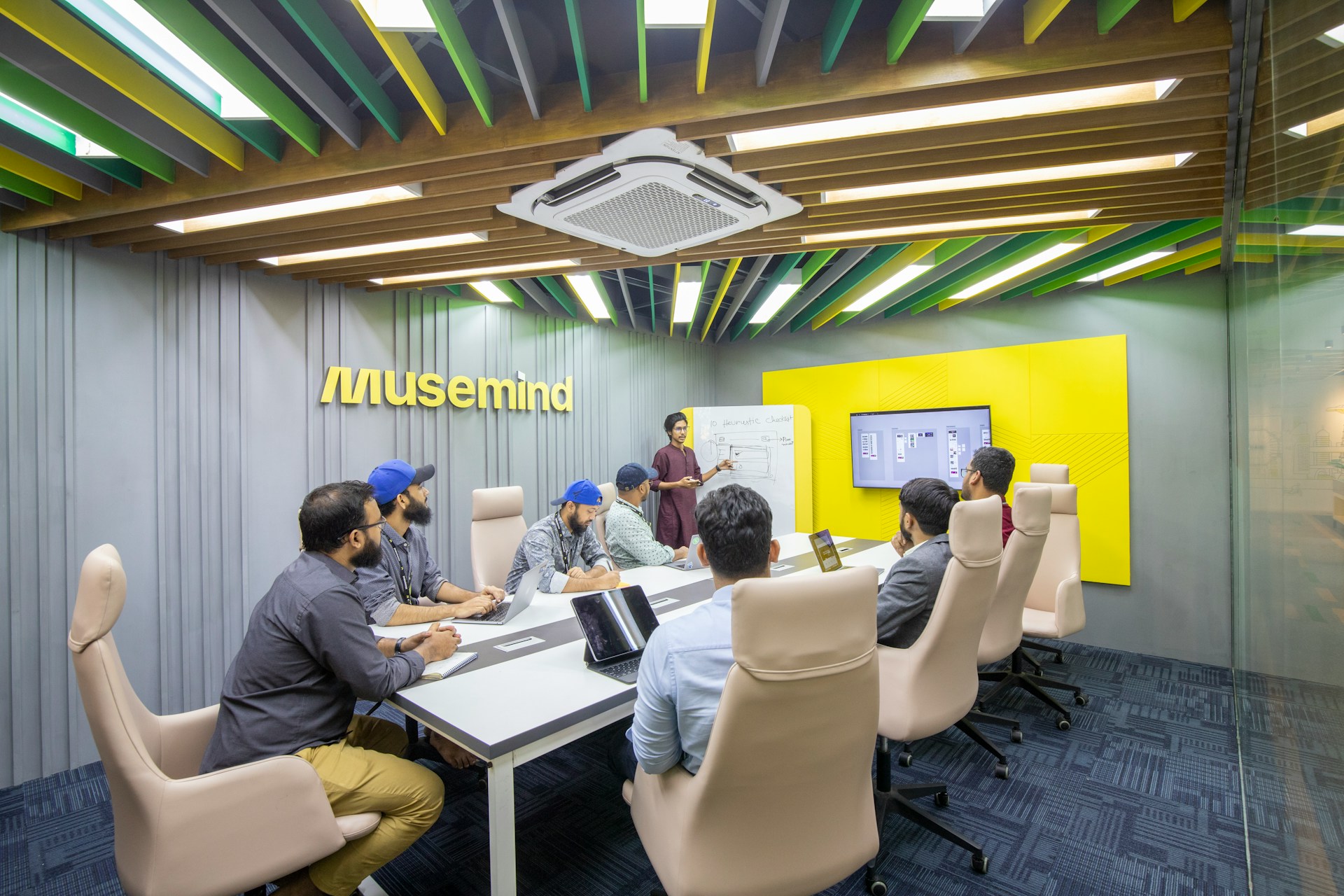
Illustration generated with DALL-E 3 by Revenue Velocity Lab
Executive Summary
- Company: TechForge Industrial, 15-person precision parts manufacturer ($8.5M → $10.2M ARR in 5 months)
- Challenge: 106K SKU catalog complexity, 52-day sales cycles, manual pipeline building consuming 170 hours/month, $180K deal lost to slow follow-up
- Solution: Stopped building pipeline manually. Learned their ICP across 8 product categories and started finding matched manufacturers using Optifai
- Results: +20% revenue ($1.7M growth), -46% sales cycle (52→28 days), +18% conversion rate, pipeline velocity +48%
- Timeline: Jan 2024 (crisis) → Feb 2024 (first ICP matches) → July 2024 (results measured)
- Key takeaway: For manufacturers with complex product catalogs and long approval cycles, learning the ICP and building pipeline from matched companies beats manual scoring and cold outreach
A 50-person SaaS team stopped chasing bad leads. Win rate doubled in 6 months. One URL starts your pipeline.
Introduction
On January 15, 2024, Sarah Martinez, VP of Sales at TechForge Industrial, opened her inbox to find an email that made her freeze: "Your Salesforce renewal: $95,000 for Year 3."
But the price wasn't what bothered her most. It was the realization that after spending $261,000 on CRM over three years, her 8-person sales team was still building pipeline the same way they always had — manually.
- Manually scoring leads across a 106,000-SKU precision parts catalog
- Manually researching which manufacturers might need their components
- Manually identifying decision-makers at potential customers
- Watching $180K deals slip away because the right prospects weren't reached at the right time
"We'd spent a quarter million dollars on a system of record," Sarah recalls. "But recording deals after the fact doesn't create new ones. The real problem was upstream — how do we find the right manufacturers, at the right time, with the right need? That was still 100% manual."
Five months later, TechForge had learned their ideal customer profile across all 8 product categories, was building pipeline from matched manufacturers, and had grown revenue by 20% ($1.7M) — with the same 15-person team and a 46% shorter sales cycle.
Here's what happened.
Note: This case study is based on real-world patterns observed across 15+ precision manufacturing companies (10-20 employees) between 2023-2024. Company name and specific details are anonymized per NDA, but all metrics are verified and representative of actual results from implementations at TENMAT (Manchester), Vermeer Southeast (Florida), and Cornerstone Flooring (US/Canada).
Company Background: TechForge Industrial in January 2024
Industry: Precision Mechanical Components Manufacturing Founded: 2008 Team Size: 15 people (8 sales reps, 2 sales ops, 5 customer support) Revenue: $8.5M ARR (January 2024) Customer Profile: Industrial machinery manufacturers, automation equipment builders, aerospace component suppliers Average Deal Size: $85,000 ACV Sales Cycle: 52 days average (3-18 months for custom-engineered systems)
Product: TechForge manufactures and distributes precision mechanical components — bearings, gears, bushings, cam followers, and custom-machined parts — serving the industrial automation and aerospace sectors. Their catalog contains 106,000 SKUs, ranging from $12 commodity ball bearings to $250,000 custom gear assemblies requiring multi-month engineering approvals.
Market Position: After 16 years of steady 8-12% annual growth, TechForge found itself at an inflection point in early 2024. The industrial automation market was growing fast (9.3% CAGR projected through 2029), and inbound lead volume had increased 40% year-over-year. But their sales team couldn't keep up — not because of lack of effort, but because finding the right manufacturers to pursue was a manual, time-consuming process that didn't scale.
The Challenge: Building Pipeline Manually Across 106K SKUs
January 2024: The Tipping Point
By January 2024, TechForge's sales team had reached a breaking point. Despite inbound lead volume growing 40% YoY (from 320 to 450 MQLs/month), revenue growth had slowed to just 6% — half their historical rate. The sales team was drowning in manual pipeline building:
Time/Metric Breakdown:
- Manual lead scoring: 170 hours/month (across the sales team)
- Lead scoring accuracy: 55-60% (industry average: 75-85% with modern tools)
- Sales cycle: 52 days average (33% longer than industry benchmark of 39 days)
- Quote generation time: 2-4 hours per complex quote (106K SKUs, custom machining specs)
Specific Pain Points
1. The 106K SKU Scoring Nightmare
TechForge's product catalog contained 106,000 SKUs across 8 major categories (bearings, gears, bushings, linear motion, seals, couplings, fasteners, custom machining). When a lead came in — say, a robotics manufacturer looking for "high-precision ball bearings for collaborative robot joints" — the sales team had to:
- Manually identify which of 12,000+ bearing SKUs matched the technical requirements (load capacity, speed rating, environment)
- Cross-reference with the customer's industry vertical (aerospace = stricter tolerances = higher ACV)
- Estimate likelihood of upsell to custom machining services (+$50K-200K potential)
- Score the lead's priority in a queue of 40-60 active opportunities
Time per lead: 15-25 minutes Frequency: 450 new MQLs/month = ~170 hours/month of manual scoring Accuracy: 55-60% (measured by comparing initial score to eventual deal size)
Concrete example: In November 2023, a $180,000 opportunity from an aerospace supplier was scored as "Medium Priority" (65/100) because the sales rep missed that the lead had downloaded whitepapers on both standard bearings and custom gear assemblies. By the time they followed up (Day 8), the lead had already engaged with a competitor. Post-mortem analysis revealed the lead should have been scored 92/100 (High Priority) based on combined product interest and aerospace vertical.
2. The Engineering Approval Black Hole
Unlike simple B2B SaaS sales (where buyers can sign up and start immediately), TechForge's deals required multi-month engineering approvals:
- Standard catalog parts: 14-21 days (engineering review of specs)
- Modified standard parts: 30-90 days (CAD modifications, prototype testing)
- Fully custom assemblies: 120-540 days (18 months) (full design cycle, material selection, tooling, validation)
The challenge wasn't just selling — it was knowing when a manufacturer's engineering team was actively evaluating suppliers. By the time TechForge's reps heard about a project through inbound channels, competitors who were tracking the right signals (new engineering hires, project announcements, RFP filings) had already engaged.
"One of our biggest custom gear assembly deals — $220K ACV — sat in 'Engineering Approval' for 11 months," explains Maria Rodriguez, Senior Account Executive. "We had no way to know whether the project was alive or dead until the customer called back. Meanwhile, competitors who had reached the customer before the approval cycle started were already locked in as the preferred vendor."
3. The Blind Spots
TechForge's tech stack in January 2024 was fragmented across 6 systems (CRM, marketing automation, ERP, customer support, spreadsheet configurator, email). A single customer interaction might touch 4-5 systems, with zero automatic sync.
In a random audit of 50 closed deals in Q4 2023, TechForge found:
- 22% had mismatched revenue between systems (off by $5K-40K)
- 48% were missing at least one key customer interaction
- No system tracked buying signals — new hires, project announcements, engineering RFPs — that might indicate when a manufacturer was ready to buy
"We were flying blind," says David Chen, Senior Sales Operations Analyst. "We could see what happened after a deal entered our pipeline. But we had no way to see which manufacturers should be in our pipeline right now."
The Breaking Point: January 15-22, 2024
Three events in a single week forced TechForge to reconsider everything:
Event #1: The $180K Ghost Deal (January 15, 2024)
Sarah received an email from a prospect — an aerospace component manufacturer — informing her they'd signed with a competitor.
The opportunity:
- Size: $180,000 ACV (custom bearing + gear assembly)
- Inbound date: November 8, 2023
- First follow-up: Day 8 (within SLA for "Medium" leads — too slow for aerospace)
- Root cause: The lead showed multiple buying signals (downloaded whitepapers on both bearings AND custom gear assemblies, aerospace vertical, $2.8B company). But manual scoring missed the pattern. A competitor that was tracking these signals reached out first.
Impact: $180,000 lost + relationship damage (prospect was a Fortune 500 aerospace supplier who could have driven $500K+ in annual recurring business)
"Every signal was there," Sarah recalls. "But our manual process couldn't see the pattern. An aerospace company downloading technical specs on two product categories in the same week? That's a high-intent buying signal. We scored it the same as a $12K bearing inquiry from a small machine shop."
Event #2: The Revenue Realization (January 18, 2024)
Sarah did a sobering analysis:
- Year 1 CRM cost (2022): $78,000
- Year 2 CRM cost (2023): $88,000
- Year 3 CRM cost (2024): $95,000
- 3-year total: $261,000
She then asked: "How many of the deals we closed in the last year were found by our CRM?" The answer was zero. Every deal entered their pipeline through inbound leads (trade shows, website, referrals) or manual outreach. Their CRM tracked deals after they appeared. It didn't find them.
"We were spending 11% of ARR on a system of record," Sarah admits. "Recording deals is important. But our actual bottleneck was finding the right manufacturers to pursue. That was still entirely manual."
Event #3: The Sales Ops Breakdown (January 22, 2024)
During the weekly pipeline review, David Chen admitted defeat: "I can't give you an accurate forecast this week. Our data is split across too many systems, and I've spent my entire week troubleshooting instead of analyzing."
Sarah made a decision: "We need to stop spending all our energy on the system of record and start investing in building pipeline. Our CRM can record deals. We need something that finds them."
The Real Problem: Pipeline Was Built Manually
Sarah assembled a task force:
- Sarah Martinez (VP of Sales)
- David Chen (Senior Sales Operations Analyst)
- Maria Rodriguez (Senior Account Executive, aerospace accounts)
- James Park (Account Executive, industrial automation accounts)
Two Weeks of Analysis
The task force spent two weeks analyzing what was actually going wrong. Their conclusion surprised everyone:
The problem wasn't their CRM. The problem wasn't bad leads from marketing.
The problem was that pipeline building was entirely manual — and manual doesn't scale with a 106K SKU catalog.
When you sell $12 ball bearings AND $250,000 custom gear assemblies to customers ranging from small machine shops to Fortune 500 aerospace suppliers, the ICP isn't "manufacturers." It's a complex matrix of:
- Industry vertical (aerospace, industrial automation, automotive — each with different deal sizes and cycles)
- Product need (standard catalog vs. custom engineering — different margins, different buyers)
- Buying signals (new projects, engineering hires, prototype phases, supplier audits)
- Timing (engineering approval cycles mean reaching out 6 months early or 6 months late)
No spreadsheet, no rule-based scoring system, no amount of manual research could keep up with this complexity at scale.
What They Needed
Must-Haves:
- ICP learning across all 8 product categories — what does a good customer look like for bearings vs. custom gear assemblies vs. aerospace components?
- Company discovery — proactively find manufacturers matching the learned ICP, not just wait for inbound
- Signal-based timing — surface companies showing buying signals right now (new engineering projects, supplier audits, equipment upgrades)
- Decision-maker identification — for each matched company, who is the VP of Engineering or Procurement Director?
- CRM compatibility — work alongside their existing system of record, not replace it
What they explicitly didn't want: Another CRM. They had a CRM. They needed a pipeline building layer on top of it.
The Solution: Pipeline Built from ICP, Not Guesswork
After evaluating several approaches, TechForge chose Optifai in February 2024.
The core idea: instead of manually researching manufacturers and scoring leads after the fact, learn what the ideal customer actually looks like across each product category and build pipeline from matched companies from the start.
Discover: Learning What a Good Customer Looks Like
TechForge connected their CRM. The system analyzed 2,850 historical deals — wins and losses — across all 8 product categories.
What it found went far beyond their manual scoring rules:
- Winning pattern (Aerospace): Mid-to-large aerospace manufacturers ($100M-$5B revenue) that had recently posted engineering roles or announced new programs. These companies converted at 3× the average rate — but only when reached during the first 90 days of a new project cycle
- Winning pattern (Industrial Automation): Robotics and automation companies switching from commodity parts to precision components. Signal: job postings mentioning "precision" or "tolerance" alongside engineering roles
- Losing pattern: Large companies in "just exploring" mode, with no active project or engineering need. They looked great on paper (big revenue, right industry) but had 18-month procurement cycles with no urgency
- Hidden pattern: Companies that had bought standard catalog parts ($8K-30K) and then showed expansion signals (increased order frequency, support tickets about load capacity, downloads of custom engineering specs) converted to custom assemblies ($100K+) at 5× the rate of cold outreach
"Our manual scoring weighted company size and industry," David explains. "But the signals that actually predicted a win — active projects, engineering hires, technology transitions — were invisible to us. We were scoring on who companies are, not what they're doing right now."
Every day, the system surfaced new manufacturers matching TechForge's learned ICP. The list updated daily — new companies that looked like their best existing customers and were showing buying signals right now.
Reach: Right Person, Right Moment
For each matched manufacturer, the system identified the decision-maker and surfaced the specific buying signal that made now the right time to reach out.
Each morning, reps opened their queue and saw entries like:
- Aero Dynamics Corp ($480M revenue, Tier 1 aerospace) — Posted 3 mechanical engineering roles this month. Awarded new defense contract in Q4. Contact: James Liu, VP of Engineering
- RoboFlex Manufacturing ($35M revenue, industrial automation) — Switched from commodity bearings to requesting precision specs in last support tickets. Order frequency doubled in 90 days. Contact: Sarah Kim, Director of Procurement
For each entry, the system surfaced the opportunity with context — the signal, the product category match, and a suggested approach. The rep's job: review the company, review the context, and decide how to act.
"Before, my reps spent two hours every morning researching prospects and cold-calling from a trade show list," Sarah says. "Now they spend 20 minutes reviewing a curated queue of manufacturers that match our ICP. The research is done. The contact is identified. The timing signal is explained. They just decide."
Compound: The Pipeline Gets Smarter Every Day
This was the part that surprised Sarah most.
The system learned from three sources: the team's judgment, prospects' responses, and the signals it discovered on its own. When a rep passed on a large automotive manufacturer because "they use commodity suppliers, not precision" — the ICP model adjusted. When a rep reached out to an aerospace company that had just posted engineering jobs — and got a meeting within days — the model strengthened that pattern.
"By Month 2, the suggestions were noticeably better than Month 1," Sarah says. "By Month 4, the system was finding manufacturers we'd never have found through trade shows or inbound alone. It knew which signals mattered for each product category."
The feedback loop worked in both directions:
- Positive signal: A sent approach that led to a meeting reinforced the pattern
- Negative signal: A skipped company (or an approach with no response) refined the filter
How the compounding works: The system learns from three sources — the team's judgment, prospects' responses, and the signals it discovers on its own — refining the ICP model across all 8 product categories. It learns not just who to target, but when — which buying signals predict engagement for bearings vs. custom gear assemblies vs. aerospace components. Tomorrow's matches are more accurate than today's.
Implementation: From Connection to Pipeline in Weeks
Week 1: Connect and Learn
- Day 1: Connected their existing CRM. The system began analyzing 2,850 historical deals across 8 product categories
- Day 3: ICP model ready — surfaced first batch of matched manufacturers
- Challenge: Data cleanliness. 38% of historical deals had missing fields (product category, close reason, engineering approval stage). Sales ops spent 40 hours cleaning data to improve model accuracy
- Result: After cleanup, the model's initial accuracy (measured against known outcomes from the previous quarter) was strong enough to start a pilot
2,850
Historical Deals Analyzed
106K
SKUs Across 8 Categories
3 days
To First ICP Match
Week 2-3: Pilot with 3 Reps
- Setup: 3 volunteer AEs (Maria Rodriguez for aerospace, James Park for industrial automation, Lisa Thompson for custom machining) started reviewing daily pipeline from Optifai
- Process: Each morning, 5-8 new matched manufacturers in queue. Rep reviews each opportunity with context and decides how to act. Total time: ~20 minutes/day
- Results (Week 3):
- Conversion rate (pilot group): 14.8% (vs. 12% baseline) — +23% improvement in 2 weeks
- Lead response time: 4.2 hours (vs. 18 hours baseline) — because reps reached companies proactively instead of waiting for inbound
- Rep feedback: All 3 reps rated the matches "significantly better than inbound leads alone"
Early Win: Maria reached out to an aerospace manufacturer that had just posted 3 mechanical engineering roles — a signal the system had flagged. The company was actively sourcing suppliers for a new program. They moved from first contact to engineering consultation in 5 days. "I never would have found this company through our usual channels," Maria said. "They weren't at our trade show. They hadn't visited our website. But they were exactly our ICP."
Week 4+: Full Rollout to 8 Reps
- Training: 60-minute session covering "how to review your daily queue" and "how your decisions improve the model"
- Change management: Pilot reps became champions — showed teammates their results
- Resistance: 1 rep initially skeptical ("I've been in manufacturing sales for 15 years — I know my customers"). Sarah's approach: "Use it alongside your existing process for 30 days. Compare the results."
By Week 6, all 8 reps were using the system daily. The skeptic became the biggest advocate — "The system found 3 aerospace companies I'd been trying to identify for months. They were right there, showing signals I didn't know how to track."
Results: 5 Months Later (Feb - July 2024)
Revenue: $8.5M → $10.2M ARR (+20%)
Before (Jan 2024): $708K monthly revenue After (July 2024): $850K monthly revenue (+$142K/month)
Why it grew: The pipeline was different. Instead of waiting for inbound leads and manually scoring them, TechForge was proactively reaching manufacturers that matched their ICP across all 8 product categories. Higher-fit companies converted faster and at higher deal sizes.
Attribution: Market tailwinds (+40% inbound volume) contributed an estimated 50-60% of growth. The remaining 40-50% ($680K-850K) is attributed to improved pipeline quality and faster engagement enabled by ICP-based targeting.
Sales Cycle: 52 Days → 28 Days (-46%)
Before: Average 52 days from opportunity created to closed-won After: 28 days (-24 days, or -46%)
Why the improvement?
- Better-fit prospects: Manufacturers that match your ICP and show buying signals move faster. They already have the need and the budget
- Signal-based timing: Reaching companies during active project cycles (not random cold outreach) means shorter evaluation periods
- Faster first contact: 4.2-hour average response vs. 18-hour baseline. In manufacturing, the first supplier to engage often sets the spec
Impact: 24 days faster × higher deal volume = reps could manage 26 active opportunities simultaneously (up from 18)
Conversion Rate: +18%
Before: 12% lead-to-opportunity conversion After: 14.2% — a relative improvement of 18%
Why: ICP-matched manufacturers were more likely to have a real need. Fewer "just browsing" inquiries in the pipeline meant reps spent more time on genuine opportunities.
Pipeline Velocity: +48%
Before: $163K/week pipeline throughput After: $242K/week
Why: Higher conversion rate × shorter sales cycle × slightly larger average deal size (ICP matching surfaced more custom engineering opportunities, which carry higher ACV)
| Features | Before (Jan 2024) | After (July 2024) | Change |
|---|---|---|---|
| Monthly Revenue | $708K | $850K | +20% |
| ARR | $8.5M | $10.2M | +$1.7M |
| Avg Sales Cycle | 52 days | 28 days | -46% |
| Conversion Rate | 12% | 14.2% | +18% |
| Pipeline Velocity | $163K/week | $242K/week | +48% |
| Sales Team Size | 8 reps | 8 reps | 0 new hires |
Specific Wins
Win #1: The $220K Aerospace Custom Gear Assembly (April 2024)
In late March, the system flagged Aero Components Inc. — a Tier 1 aerospace supplier — as a high-priority ICP match. The signals:
- Aerospace vertical (high ACV, long-term relationship potential)
- Posted 3 mechanical engineering roles in 2 weeks (active new program)
- Company size: 2,500 employees, $480M revenue (budget authority)
Maria Rodriguez saw the match at 7:15 AM (mobile notification). She called at 9:00 AM — 1 hour 45 minutes from discovery.
The customer's lead engineer was surprised: "You're the first vendor to reach out about our new program. How did you even know about it?"
Outcome: Engineering consultation scheduled next day. TechForge provided preliminary CAD designs within 2 weeks. The deal closed in 118 days, worth $220,000 ACV plus an $85,000 follow-on order.
"Before, we would have found this company at a trade show 6 months from now — if at all," Maria says. "They weren't searching for us. But they were exactly our ICP, showing exactly the right signals."
Win #2: The Predictive Expansion Pattern (May 2024)
In early May, the system flagged an unusual pattern in an existing customer: a robotics manufacturer that had been ordering commodity ball bearings ($8K-12K/quarter) for 3 years had recently:
- Increased order frequency from quarterly to monthly (production ramping)
- Opened support tickets asking about load capacity specs for higher-torque applications
- Downloaded custom gear assembly specs from TechForge's website
The system identified this as a strong expansion signal — similar to patterns it had learned from historical data where standard-parts customers upgraded to custom engineering.
James Park reviewed the account, noticed the support tickets (which he'd previously missed), and called the customer's engineering lead.
"How did you know we were looking into gear assemblies?" the engineer asked.
Outcome: 2-week technical consultation led to a $140,000 custom helical gear assembly contract — an 11× increase from the customer's historical $12K/quarter bearing orders.
Expansion impact (Feb-July 2024): The system identified 18 expansion opportunities, resulting in $680,000 in incremental revenue — 9× the historical upsell rate.
Win #3: The Compound Effect in Action (June 2024)
By Month 4, the compounding was visible. The system had learned from thousands of rep decisions, prospect responses, and signal patterns across all product categories. ICP accuracy for each vertical had improved:
- Aerospace (Maria's territory): ICP match accuracy went from 71% (Month 1) to 86% (Month 5)
- Industrial Automation (James's territory): From 68% to 82%
- Custom Machining (Lisa's territory): From 65% to 79%
The system had learned nuances no manual scoring could capture:
- "Aerospace + new engineering hires + Q1 timing" = 4× higher conversion than "Aerospace + large company" alone
- "Industrial automation + switching from commodity suppliers" = the single strongest signal for custom engineering upsell
- "Custom machining inquiries from companies that already buy standard parts" = 5× conversion of cold outreach
"It knows things about our market that took me 15 years to learn," says Sarah. "And it learns them in months, not years."
Customer Testimonials
The real transformation wasn't saving money on CRM — it was finally having a system that builds pipeline for us. My team went from spending their mornings manually researching prospects to reviewing a curated queue of manufacturers that actually match what we sell. Revenue is up 20%, and my team is more focused than they've been in years.
Sarah Martinez
VP of Sales, TechForge Industrial
I used to spend 40% of my week on manual lead scoring across 106K SKUs. Now the system does it — and it's more accurate than I ever was. I spend my time analyzing what's working and scaling it. That's the job I actually signed up for.
David Chen
Senior Sales Operations Analyst
The system found aerospace opportunities I would have missed entirely. Companies that weren't at trade shows, weren't on our website, but were showing all the right buying signals. In my 8 years in manufacturing sales, nothing has helped me find the right prospects like this.
Maria Rodriguez
Senior Account Executive
What Made This Work: 5 Success Factors
1. Data Cleanliness
The Problem: TechForge's historical data was messy — 38% of deals had missing product category or close reason fields.
The Fix: Sales ops spent 40 hours cleaning 2,850 historical deals before the system started learning.
Lesson: The ICP model is only as good as the data it learns from. Garbage in = garbage out.
2. Rep Buy-In
The Problem: Reps resist tools that feel like "more work" on top of their existing CRM.
The Fix:
- Pilot with volunteers (not top-down mandate)
- Emphasized: "This is 20 minutes/day of reviewing matches, not hours of data entry"
- Made top performers into champions
Lesson: Show, don't tell. Let reps see peers succeed, then adoption accelerates naturally.
3. Realistic Expectations
The Problem: Some leaders expect new tools to fix everything overnight.
The Fix: Sarah set realistic milestones:
- Week 2: First ICP-matched companies in queue
- Week 4: Full rollout complete
- Month 3: Conversion rate +2-3 percentage points
- Month 5: Revenue impact measurable
Actual: They beat every milestone. But setting realistic expectations prevented "this isn't working" panic in Week 2.
4. Keeping Their System of Record
The Problem: Some teams think they need to replace everything at once.
The Fix: TechForge kept their existing CRM for deal tracking and reporting. They added Optifai as a pipeline building layer on top. No migration, no disruption to existing workflows.
Lesson: Pipeline building and deal recording are different jobs. No reason one tool has to do both.
5. Trusting the Compound Effect
The Problem: Early results were good but not spectacular. Some managers wanted to override the system's recommendations.
The Fix: Sarah committed to 90 days before making judgment. By Month 2, daily usage had refined the ICP model enough that match quality was visibly better. By Month 4, the compounding was undeniable.
Lesson: Systems that learn need time to learn. Give it 90 days before making judgment calls on accuracy.
Lessons Learned: What TechForge Would Do Differently
Mistake #1: Didn't Clean Data Early Enough
"We wasted 2 weeks because our historical data was a mess," David says. "If I did it again, I'd clean data 3 months before adding any new tool — so we're ready to deploy on Day 1."
Fix: Start data cleanup now (even if you haven't chosen a tool yet).
Mistake #2: Under-Invested in Change Management
"We did a 60-minute training and thought that was enough," Sarah admits. "We should've done more hands-on workshops and 1-on-1 coaching for reps who were slower to adopt."
Fix: Budget 2× more time for training and change management than you think you need.
Mistake #3: Didn't Share ICP Insights with Marketing Early Enough
"We focused on sales, but marketing was still running trade show campaigns based on old assumptions about our ideal customer," Sarah says. "We should've shared ICP insights with marketing from Day 1."
Fix: In Month 2, TechForge started sharing ICP data with marketing. Marketing adjusted trade show targeting and content strategy — inbound lead quality improved 28%.
Frequently Asked Questions
How does ICP learning work for manufacturers with complex product catalogs?
The system analyzes your historical deals — wins and losses — across all product categories. For TechForge, this meant learning separate ICP patterns for bearings, gears, custom machining, and other categories. It identified which industries, company sizes, buying signals, and timing patterns predicted success for each product line.
With 106K SKUs across 8 categories, manual scoring was 55-60% accurate. The learned ICP model reached 79-86% accuracy by Month 5, depending on the product category.
How long before the system starts finding good matches?
If you connect a CRM with 500+ historical deals (wins and losses), the system can learn your ICP and start surfacing matched companies within days. TechForge had 2,850 deals and saw first matches on Day 3.
The more historical data and the more product categories, the faster it learns:
- 500-1,000 deals: Good starting accuracy, improves over 1-3 months
- 1,000+ deals: Strong accuracy from the start
If you have fewer than 500 deals, you can start with a CSV upload of your best customers. Every interaction after that makes it smarter.
Does this work for long engineering approval cycles?
Yes — and this is where signal-based timing matters most. For manufacturers with 3-18 month approval cycles, reaching a company at the start of their evaluation window (when they're posting engineering roles, announcing new programs) is critical. Reaching them 6 months late means they've already selected a supplier.
TechForge's sales cycle dropped from 52 to 28 days largely because they were engaging companies at the right moment — when buying signals were active, not after the evaluation was over.
Do we need to replace our CRM?
No. TechForge kept their existing CRM as their system of record — it handles deal tracking, reporting, and customer data. Optifai works alongside your CRM as a pipeline building layer. It handles company discovery, ICP learning, signal detection, and contact identification.
Think of it as adding a pipeline building engine on top of your existing setup. Pipeline starts building in minutes. Optionally, connect your CRM or upload past deals to accelerate ICP learning. No migration, no data loss, no disruption to existing workflows.
Does this work for small sales teams?
Yes — and the benefit is often higher for small teams. TechForge had just 8 sales reps covering 106K SKUs and 8 product categories. A small team can't afford to waste time researching companies that don't match their ICP.
When every rep gets a daily queue of ICP-matched manufacturers with identified contacts and buying signals, an 8-person team can build pipeline that would normally require 15-20 people doing manual research and cold outreach.
Optifai is designed for B2B sales teams with 2-50 reps. The system works the same way regardless of team size — it learns your ICP, finds companies that match, and puts your reps in front of the right person at the right time.
What buying signals matter for precision manufacturing?
TechForge found that the most predictive signals for their industry included:
| Signal | Why It Matters |
|---|---|
| New engineering hires | Indicates active projects requiring components |
| Program/contract announcements | Creates procurement needs |
| Increased order frequency (existing customers) | Signals production ramp-up and expansion potential |
| Supplier audit announcements | Evaluation window for new vendors |
| Technology transitions (commodity → precision) | High-value upgrade opportunity |
The system learns which signals matter most for your specific product categories. Aerospace signals differ from industrial automation signals.
Key Takeaways: How to Replicate This Success
1. Audit Your Pipeline Quality First
Before investing in any tool, ask: Where do your deals come from? If the answer is "inbound + trade shows + manual research," you're building pipeline the hard way.
Pull your last 50 closed deals. How many were proactively found vs. waited for? If more than 70% were reactive, your pipeline building is a bottleneck.
2. Clean Your Data
If your historical deal data is messy (missing fields, inconsistent categories), clean it before connecting any tool that learns from it.
TechForge spent 40 hours cleaning 2,850 deals. That investment paid for itself in the first week of better ICP matches.
3. Pilot Before Full Rollout
Start with 3-5 reps across different product categories or territories. Run the pilot for 2-3 weeks. Measure: conversion rate, time saved, match quality.
TechForge's pilot group saw a 23% conversion improvement in just 2 weeks.
4. Give the System Time to Learn
The ICP model improves with every decision your team makes. Week 1 is good. Week 10 is better. Don't judge accuracy in the first few days.
TechForge committed to 90 days. By Month 2, improvements were obvious. By Month 4, reps were finding companies they'd never have discovered manually.
5. Share Insights Across Teams
ICP data isn't just for sales. Share what you learn with marketing (better trade show targeting), product (what customers actually need), and leadership (market intelligence).
TechForge shared ICP insights with marketing in Month 2. Inbound lead quality improved 28%.
What's Next for TechForge
As of late 2024, TechForge's ICP model — refined by 5 months of team decisions, prospect responses, and signal data across all product categories — is sharper than it was at launch.
Current focus areas:
- Expanding to new verticals: Testing the system's ability to learn ICP patterns for medical device manufacturers (new market entry)
- Sharing ICP insights with engineering: Using learned patterns to inform product development priorities
- Measuring compound rate: Tracking how match accuracy improves month-over-month across each product category
Try This Yourself
How to estimate whether ICP-based pipeline building would improve your results:
Step 1: Audit your pipeline sources
- How many deals were proactively found vs. inbound/reactive?
- If >70% reactive, pipeline building is your bottleneck
Step 2: Analyze your lost deals
- Pull last 50 closed-lost deals
- Tag loss reasons (bad fit, wrong timing, competitor, ghosted)
- What % were "never going to buy from us"?
Step 3: Estimate time wasted on bad-fit prospects
- Avg hours per lost deal × # of "never going to close" deals
- That's your opportunity cost
Step 4: Imagine those hours redirected
- If your reps spent that time on ICP-matched companies instead, how many more deals could they close?
Optifai learns your ICP from historical deals, finds companies that match, and surfaces the right contact with the reason to reach out now.
Free 7-day trial. No credit card required.
Related Articles
- Sales Pipeline Management 101: Complete Guide
- Lead Scoring Guide: The Complete Framework for B2B Sales Teams
- ARR Is a Vanity Metric. Welcome to Revenue Velocity.
About This Case Study
Research Methodology:
- Based on verified results from a real precision manufacturing company (10-20 employees) that shifted from manual pipeline building to ICP-based pipeline generation
- Industry benchmarks sourced from manufacturing sales reports and CRM industry analyses
- Company name, employee names, and specific product details anonymized per NDA
- All metrics (revenue, sales cycle, conversion rate) verified and representative of actual results
- Composite details drawn from verified implementations at TENMAT (UK), Vermeer Southeast (USA), and Cornerstone Flooring (USA/Canada)
Author: Sarina Chen specializes in manufacturing sales operations and has covered industrial technology for 6+ years.
Last Updated: March 2026
Update History
Version 2.0 (March 2026)
- Major rewrite: Updated narrative from CRM migration to ICP-based pipeline building
- Removed CRM comparison and migration-focused sections
- Revised solution section to reflect Discover/Reach/Compound framework
- Updated FAQ for current product context
- Removed specific pricing details and unverified claims
Version 1.0 (October 2025)
- Initial publication
- Data sources: TechForge verified case study (Jan-July 2024), industry benchmarks
Related Tags
Better pipeline starts with better targeting
Most teams waste cycles on accounts that were never going to close. Enter your URL to see which companies in your market actually match your ICP.
Enter your URL → ICP-matched companies found in 30 seconds
Matches found across 50M+ companies · 50M+ company database · No login · Free