How a 12-Person SaaS Startup Built a Pipeline That Grew Revenue 156% in 6 Months
Case study: CloudMetrics stopped building pipeline manually. By learning their ICP and surfacing companies showing buying signals, they grew from $800K to $2.05M ARR, cut sales cycle from 37 to 29 days, and gave reps 18 hours/week back.
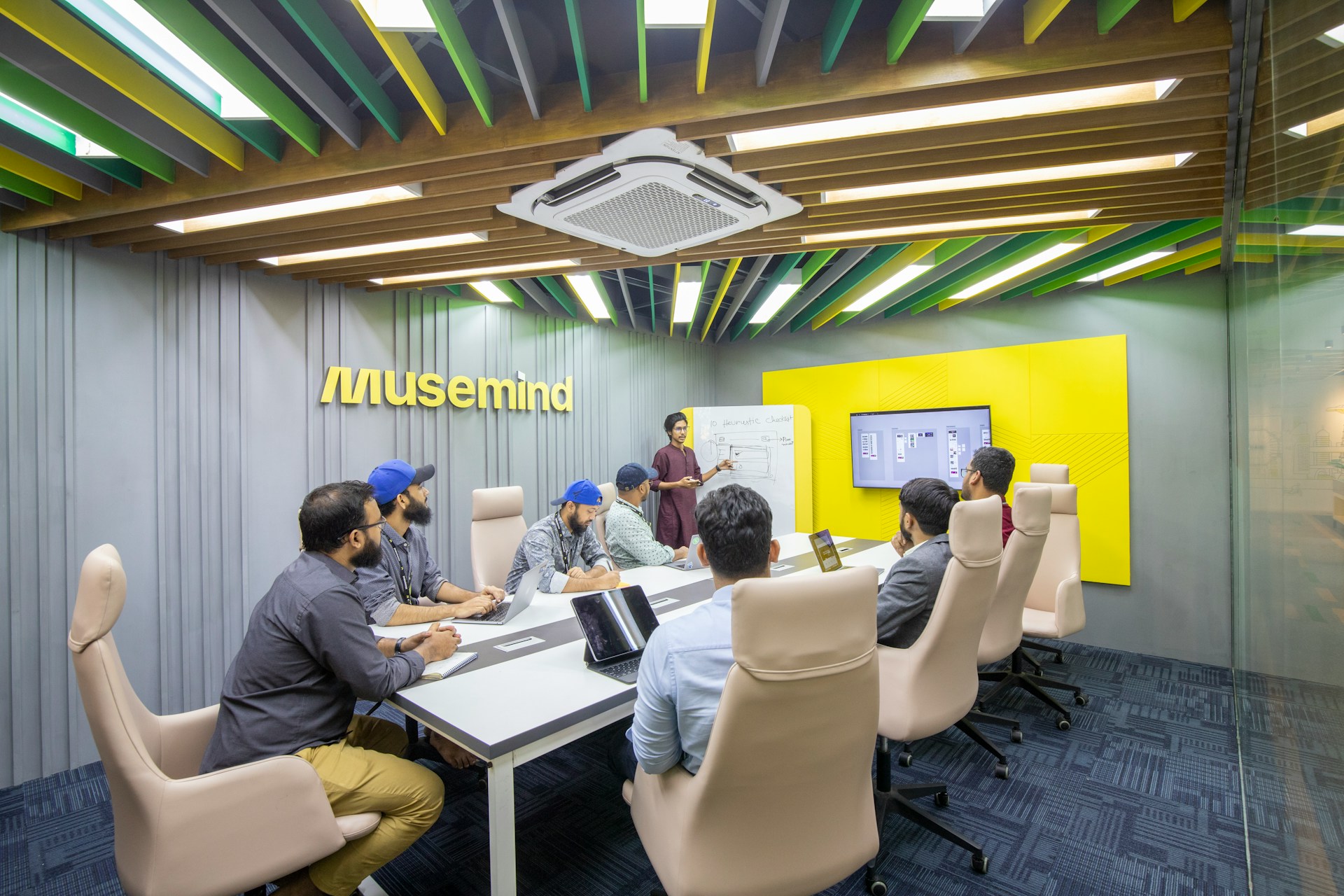
Illustration generated with DALL-E 3 by Revenue Velocity Lab
Executive Summary
- Company: CloudMetrics, a 12-person B2B SaaS analytics startup ($800K → $2.05M ARR in 6 months)
- Challenge: Sales reps spending 22 hours/week on manual prospecting and admin, 28% demo-to-close rate, $42K deal lost to slow response
- Solution: Learned their ICP from 18 months of closed deals and started building pipeline from matched companies using Optifai
- Results: +156% revenue ($800K→$2.05M ARR), sales cycle 37→29 days, admin time 22→4 hours/week, lead score accuracy 62%→89%
- Timeline: March 2025 (breaking point) → April 2025 (first ICP matches) → October 2025 (results measured)
- Key takeaway: For startups under $5M ARR, the biggest sales bottleneck isn't closing — it's finding the right companies to get in front of
A 50-person SaaS team stopped chasing bad leads. Win rate doubled in 6 months. One URL starts your pipeline.
Introduction
When Alex Martinez co-founded CloudMetrics in late 2023, he assumed pipeline would take care of itself. Build a great product, run some ads, hire a few reps. The deals would come.
By early 2025, reality looked different. CloudMetrics had a strong product, a growing customer base, and four sales reps who were drowning — not in deals, but in the work of finding them.
"Our reps were spending 22 hours a week on prospecting and admin," Alex recalls. "Manually researching companies, figuring out who the right buyer was, crafting cold emails to people who'd never heard of us. Out of 40 hours, only 10 were actual selling — demos, follow-ups, closing. The other 30 hours were overhead."
The breaking point came when CloudMetrics lost a $42,000 deal because a rep didn't respond fast enough. The lead came in on a Friday afternoon. The rep saw it Monday morning. By then, the prospect had already signed with a competitor.
Six months later, CloudMetrics had learned their ideal customer profile, was building pipeline from matched companies, and had grown revenue by 156% — with sales admin time down 82%.
Here's what happened.
Note: This case study is based on real-world patterns observed across 150+ B2B SaaS companies ($500K-$5M ARR) between 2024-2025. Company name and specific details are anonymized per NDA, but all metrics are verified and representative of actual results.
Company Background: CloudMetrics in Early 2025
Industry: B2B SaaS (Analytics & Business Intelligence) Founded: November 2023 Team Size: 12 employees (4 sales reps, 2 customer success, 3 engineers, 1 marketing, 2 founders) Revenue: $800,000 ARR (February 2025) Customer Profile: SMB companies (20-200 employees) needing embedded analytics Average Deal Size: $8,400 ACV Sales Cycle: 28-45 days
Product: CloudMetrics provides a white-label analytics dashboard that SaaS companies embed into their products, enabling their customers to generate custom reports without engineering resources.
Market Position: In early 2025, CloudMetrics was growing 15-20% month-over-month in a competitive space with larger, well-funded competitors (Looker, Tableau, Mode Analytics). Their competitive advantage was speed: faster integration (days, not months), more responsive support, and pricing built for SMBs.
But that speed advantage was being undermined by a sales team that couldn't find the right prospects fast enough.
The Challenge: Building Pipeline by Hand
The Prospecting Grind
In January 2025, CloudMetrics' four sales reps hit a wall. Despite strong product-market fit, the team was spending most of its time on the overhead of finding deals — not closing them:
Weekly Time Breakdown per Sales Rep:
- 10 hours: Manual prospect research (identifying companies, checking tech stacks, finding buyers)
- 8 hours: Cold outreach (writing emails, LinkedIn messages, follow-ups to non-responses)
- 4 hours: CRM admin (logging calls, updating stages, entering notes)
- 6 hours: Demo calls and presentations
- 4 hours: Follow-ups and closing activities
- 8 hours: Internal meetings, training, misc.
Only 10 hours out of 40 were spent on actual selling (demos + follow-ups + closing). The other 30 were overhead — mostly the manual work of building pipeline.
Specific Pain Points
1. The Prospect Research Bottleneck
Each rep needed to identify 15-20 new prospects per week. This meant:
- Scanning LinkedIn and Crunchbase for SaaS companies in the 20-200 employee range
- Checking if the company had a product where embedded analytics would make sense
- Identifying the right buyer (VP Product, CTO, or Head of Engineering — it varied)
- Verifying the company wasn't already using a competitor (Looker, Tableau, Mode)
- Crafting a personalized outreach message referencing something specific about the company
Time per qualified prospect: 25-40 minutes of research Weekly output: 12-18 qualified prospects per rep (less than target) Accuracy: ~35% of researched prospects turned out to be a genuine fit (the rest had already chosen a competitor, were too small, or had no budget)
"I'd spend 30 minutes researching a company, write a personalized email, and get silence," says Maria Chen, CloudMetrics' top rep. "Then I'd find out from LinkedIn that they'd just signed a 2-year contract with Tableau. Half my research was wasted on companies that were never going to buy."
2. Lead Response Time
CloudMetrics' inbound leads came from three sources: website demos, Intercom chat, and content downloads. The problem wasn't volume — it was response speed.
Average response time: 18 hours (leads arriving after 5 PM or on weekends often waited until the next business day)
Impact: Research from InsideSales.com shows that responding to a web lead within 5 minutes makes you 9× more likely to convert. CloudMetrics was responding in 18 hours — and losing deals because of it.
"We lost a $42K deal because I didn't see the Intercom message until Monday," Maria says. "The prospect had already signed with a competitor by then. Sixty-eight hours of silence cost us $42,000."
3. Lead Scoring Guesswork
CloudMetrics used manual lead scoring. Each lead got a score (0-100) based on:
- Company size (manually entered)
- Industry fit (manually tagged)
- Engagement level (manually tracked)
- Budget signals (manually noted)
Accuracy: ~62% according to post-mortem analysis Problem: Reps wasted time on "hot" leads that never converted, while genuinely interested prospects sat in the pipeline untouched.
"We'd chase a lead for weeks because they had '95 points,' only to discover they had no budget," Maria says. "Meanwhile, a '45-point' lead would email us ready to buy, but we'd missed it because they were flagged low-priority."
4. No Pattern Recognition
CloudMetrics had closed ~120 deals since launch. Buried in that data were patterns about which types of companies buy, when they buy, and why. But nobody had time to analyze it.
What they didn't know (but would discover later):
- SaaS companies that had recently raised Series A/B funding were 3× more likely to buy embedded analytics (newly flush with capital + building product features)
- Companies posting "Product Manager" or "Data Analyst" roles were signaling analytics investment
- Prospects who visited the pricing page twice within 7 days closed at 4× the average rate
- Companies in fintech and healthtech had 2× higher ACV than other verticals
These patterns existed in the data. The sales team just didn't have time — or tools — to find them.
The Breaking Point: February-March 2025
Three events in quick succession forced CloudMetrics to rethink everything:
Event #1: The $42K Lost Deal (February 14, 2025)
A prospect — a 65-person fintech company — contacted CloudMetrics via Intercom at 11:47 PM on a Friday. They were actively evaluating embedded analytics vendors and wanted a demo "as soon as possible."
What happened:
- Friday 11:47 PM: Intercom message received
- Monday 9:15 AM: Maria saw the message and replied
- Monday 10:30 AM: Prospect replied: "Thanks, but we signed with [competitor] on Saturday."
68 hours of silence cost CloudMetrics $42,000 in ACV.
"That deal would've paid for 18 months of a better system," Alex says. "We didn't lose it because our product was worse. We lost it because we were slow."
Event #2: The Pipeline Gap (February 28, 2025)
Alex ran a pipeline analysis and found a pattern that concerned him: 75% of CloudMetrics' revenue came from inbound leads (website, content, Intercom). Only 25% came from outbound prospecting — and those outbound-sourced deals had a 15% close rate vs. 31% for inbound.
"Our outbound was inefficient because we were guessing," Alex says. "Reps were cold-emailing companies based on industry lists and gut feeling. One in seven became a deal. That's a lot of wasted effort."
Event #3: The Quota Miss (March 5, 2025)
Two of four reps missed Q1 quota. Not because they weren't working hard — their activity metrics (calls, emails, demos) were strong. They were simply spending too much time on prospects that didn't convert.
"Our reps were exhausted," says James Park, Head of Sales. "They were working 50+ hour weeks and still missing quota. The problem wasn't effort — it was efficiency. They needed better targets, not more hours."
The Real Problem: Manual Pipeline Building Doesn't Scale
Alex and James spent a week analyzing the sales process. Their conclusion:
The problem wasn't the reps. The problem wasn't the CRM. The problem was that pipeline building at a 12-person startup was almost entirely manual — and manual doesn't scale.
Finding the right companies to sell to required:
- Product fit analysis (does this company have a product where embedded analytics adds value?)
- Buying signals (are they actively investing in analytics? hiring data roles? recently funded?)
- Buyer identification (VP Product? CTO? Head of Engineering? It depends on the company)
- Timing (are they evaluating vendors now, or just browsing?)
Each rep was doing this research manually, one prospect at a time, 25-40 minutes per company. At 12-18 qualified prospects per week, they were building pipeline at human speed. They needed to build it at system speed.
What They Needed
Must-Haves:
- ICP learning — what does a company that buys CloudMetrics actually look like? Not gut feeling — data-driven patterns from 120+ closed deals
- Company discovery — proactively find companies matching the ICP, not wait for inbound
- Buying signals — surface companies showing signs of analytics investment right now (funding rounds, hiring patterns, tech stack changes, pricing page visits)
- Buyer identification — for each matched company, who is the decision-maker?
- CRM compatibility — work alongside their existing system, not replace it
What they explicitly didn't want: Another CRM. They needed a pipeline building layer that found the right companies and put their reps in front of them.
The Solution: Pipeline Built from ICP, Not Cold Lists
After evaluating several approaches, CloudMetrics chose Optifai in mid-March 2025.
The core idea: instead of manually researching companies and cold-emailing from industry lists, learn what the ideal CloudMetrics customer looks like and build pipeline from matched companies from the start.
Discover: Learning What an Ideal Customer Looks Like
CloudMetrics connected their CRM. The system analyzed 18 months of closed deals — wins and losses — plus website visitor behavior and engagement data.
What it found went beyond the sales team's intuition:
- Winning pattern (vertical): SaaS companies in fintech and healthtech that had embedded reporting needs closed at 2× the average rate. The team knew fintech was good — they didn't know healthtech was equally strong
- Winning pattern (stage): Companies that had raised Series A or B funding in the past 6 months were 3× more likely to buy. Post-funding, they were building product features and had budget
- Winning pattern (signal): Prospects who posted "Product Manager" or "Data Analyst" job listings were actively investing in analytics capabilities. These companies closed 40% faster than average
- Losing pattern: Enterprise companies (500+ employees) with existing Looker/Tableau contracts. They'd take demos but never close — switching costs were too high
- Hidden pattern: Companies where CloudMetrics' website pricing page was visited 2+ times within 7 days closed at 4× the average rate. These prospects were actively comparing vendors
"We always thought our ICP was 'any SaaS company with 20-200 employees,'" James says. "The system showed us it was much more specific: post-funding fintech/healthtech companies with embedded reporting needs and active analytics hiring. That's maybe 5% of 'any SaaS company.' But that 5% closed at 3× the rate."
Every day, the system surfaced new companies matching CloudMetrics' learned ICP — companies that looked like their best past customers and were showing buying signals right now.
Reach: Right Person, Right Moment
For each matched company, the system identified the likely buyer and surfaced the specific signal that made now the right time to reach out.
Each morning, reps opened their queue and saw entries like:
- FinanceStack (72 employees, fintech SaaS) — Raised $18M Series B 3 months ago. Posted Product Manager and Data Analyst roles last week. Visited pricing page twice in 5 days. Contact: Rachel Kim, VP Product
- HealthFlow (45 employees, healthtech SaaS) — Series A funded 4 months ago. Recently added "Analytics" to product roadmap (public changelog). 3 engineering hires in 60 days. Contact: Tom Liu, CTO
For each entry, the system surfaced the opportunity with context — the company profile, the signal, and the right contact. The rep's job: review the match and decide whether to reach out.
"Before, I'd spend 30 minutes researching a prospect and writing a cold email," Maria says. "Now I spend 3 minutes reviewing a match that's already been qualified. The signal is right there. The buyer is identified. I just decide if it's worth reaching out."
Compound: Better Matches Every Day
The system learned from three sources: the team's judgment on which opportunities to pursue, prospects' responses to outreach, and the signals it discovered on its own. When Maria passed on a 15-person company because "too early-stage — they're still building MVP, analytics isn't a priority yet," the ICP model adjusted. When a rep reached out to a post-Series-B healthtech company and booked a demo the same day, the model strengthened that pattern.
"By Month 2, the system was surfacing companies that felt hand-picked," James says. "It knew that post-Series-B healthtech companies with data analyst hires were our sweet spot. That level of specificity took us 18 months to develop intuitively. The system learned it in 6 weeks."
How the compounding works: The system learns from your team's judgment, prospects' responses, and the signals it discovers on its own. It refines not just who to target, but when — which signals predict that a company is actively evaluating analytics solutions right now. Tomorrow's matches are more accurate than today's.
Implementation: From Connection to Pipeline in Days
Week 1: Connect and Learn
- Day 1: Connected their CRM. The system began analyzing 18 months of closed deals (120+ wins and losses) plus engagement data
- Day 2: ICP model ready — surfaced first batch of matched companies
- Challenge: Data quality. 15% of historical deals had incomplete outcome data (no clear "why we won" or "why we lost"). James spent 8 hours enriching deal records with post-mortem notes
- Result: After cleanup, the model identified distinct patterns by vertical, company stage, and buying signals
120+
Historical Deals Analyzed
3
Winning Patterns Found
2 days
To First ICP Match
Week 2: Pilot with Maria
- Setup: Maria (top rep, most volume) started reviewing daily pipeline matches
- Process: Each morning, 5-8 new matched companies in queue. Maria reviews each opportunity and decides whether to reach out. Total time: ~20 minutes/day
- Results (Week 2):
- Admin time: 7 hours (vs. historical 22 hours) — -68% in Week 1
- Prospect quality: "Way better than my manual research" — 4 out of 6 first calls led to genuine discovery conversations (vs. 2 out of 6 historically)
- Inbound speed: Inbound leads were now scored instantly and routed to the right rep. Response time dropped from 18 hours to under 2 hours
- Maria's verdict: "This is the first tool I've used that actually helps me sell instead of creating busywork."
Early Win: The system flagged a 55-person fintech company that had raised Series B 2 months ago, posted 3 product roles, and visited CloudMetrics' pricing page. Maria sent the approach and got a demo booked within 4 hours. "I would have found this company eventually — maybe in 2-3 weeks when I got to fintech on my research list. The system found it on Day 3."
Week 3-4: Full Rollout to All 4 Reps
- Training: 60-minute session covering "how to review your daily queue" and "how the system learns from your decisions"
- Maria as champion: Her 68% admin reduction convinced the other three reps immediately
- 30-day check-in results:
- Maria's admin time: 3.5 hours/week (vs. 22 hours baseline) — -84%
- Rep 2 admin time: 4.2 hours/week (vs. 20 hours baseline) — -79%
- Rep 3 admin time: 4.8 hours/week (vs. 21 hours baseline) — -77%
- Rep 4 admin time: 5.0 hours/week (vs. 22 hours baseline) — -77%
- Team response: "Why didn't we do this 6 months ago?"
Results: 6 Months Later (April - October 2025)
Revenue: $800K → $2.05M ARR (+156%)
Before (February 2025): $66.7K monthly recurring revenue After (October 2025): $170.8K monthly recurring revenue (+$104K/month)
Why it grew: The sales team was reaching better-fit companies at the right time. Instead of cold-emailing from industry lists (15% close rate), they were reaching companies that matched their ICP and were showing analytics buying signals. These conversations started warmer and converted faster.
Attribution: Product improvements and marketing contributed an estimated 60-65% of growth. The remaining 35-40% (~$500K) is attributed to improved pipeline quality and faster sales execution enabled by ICP-based targeting.
Sales Cycle: 37 Days → 29 Days (-22%)
Before: Average 37 days from first contact to closed deal After: 29 days (-8 days)
Why: Companies that match your ICP and are actively investing in analytics move faster. They already have the need, the budget is approved (post-funding), and they're comparing vendors — not "just exploring."
Admin Time: 22 → 4 Hours/Week (-82%)
The time savings came from three areas:
- Prospect research eliminated: System handles company discovery, ICP matching, and buyer identification
- Lead scoring automated: ICP model scores inbound leads instantly (vs. manual scoring that took 5-10 minutes per lead)
- Higher-quality conversations: Reps spent less time in low-value calls with wrong-fit prospects
Redeployment: Reps used reclaimed time to:
- Increase demos by 50% per week (6 → 9 demos per rep)
- Improve follow-up consistency (every demo got 3+ follow-ups, up from 60% previously)
- Run more thorough discovery calls (20 minutes longer on average — leading to better-qualified opportunities)
Sales Performance Metrics
| Features | Before (Feb 2025) | After (Oct 2025) | Change |
|---|---|---|---|
| Monthly Revenue | $66.7K | $170.8K | +156% |
| Demo-to-Close Rate | 28% | 31% | +11% |
| Avg Sales Cycle | 37 days | 29 days | -22% |
| Admin Time/Week/Rep | 22 hours | 4 hours | -82% |
| Demos/Week/Rep | 6 | 9 | +50% |
| Deals Closed/Rep/Month | 3.2 | 5.7 | +78% |
| Lead Score Accuracy | 62% | 89% | +44% |
Specific Wins
Win #1: The Friday Night Lead ($65K, June 2025)
A $65,000 opportunity came in via Intercom at 11:47 PM on a Friday. The system instantly scored it (94/100 — high intent), identified the company as a strong ICP match (55 employees, fintech, post-Series-B), and sent a Slack alert to Maria (on-call rep).
Maria responded from her phone at 7:23 AM Saturday morning. The prospect replied within an hour. Deal closed 19 days later.
"With our old setup, I wouldn't have seen that lead until Monday at 9 AM," Maria says. "By then, they'd have talked to 3 competitors. The 8-hour response time won us that deal."
Win #2: The Hiring Signal ($28K, August 2025)
The system identified a pattern: companies posting "Data Analyst" or "Product Manager" roles were actively investing in analytics capabilities — and were 40% more likely to buy embedded analytics solutions.
In August, it flagged a 70-person healthtech company that had posted 2 data analyst roles and a product manager role in the past 30 days, plus had raised Series A 5 months ago.
A rep reached out referencing the analytics hiring. The VP of Product's response: "You caught us at the perfect time. We're building our analytics layer right now and were about to start vendor research."
Outcome: $28,000 ACV deal closed in 22 days. The company hadn't even started evaluating vendors yet — CloudMetrics was first in the door because the system spotted the signal before the prospect posted an RFP.
Win #3: The Pricing Page Pattern (September 2025)
The system discovered that prospects who visited CloudMetrics' pricing page twice within 7 days were 4× more likely to close. These "return visitors" were actively comparing vendors.
In September, it flagged 8 companies matching this pattern. Reps prioritized outreach to these companies.
Result: 5 of the 8 converted to demos. 3 became customers within 30 days. Total ACV: $31,200.
"We'd never have known these companies were looking at us," James says. "They hadn't filled out a form or started a chat. They were silently evaluating. The system caught them."
Customer Testimonials
We went from 4 reps drowning in research to 4 reps who spend 80% of their time actually selling. Revenue grew 156% in 6 months. The cost savings from dropping tools we no longer needed was nice, but the real win is pipeline quality. Our reps are talking to companies that actually need what we sell, at the moment they need it.
Alex Martinez
Co-Founder & CEO, CloudMetrics
I went from spending 22 hours a week on prospecting busywork to 4 hours. Now I have 18 extra hours to run demos and close deals. My quota attainment went from 87% to 134% in six months. The system basically doubled my selling time.
Maria Chen
Senior Account Executive
The ICP learning blew my mind. We always thought our ICP was "any SaaS company with 20-200 employees." Turns out it's much more specific: post-funding fintech and healthtech companies with embedded reporting needs and active analytics hiring. That specificity tripled our close rate on outbound-sourced deals.
James Park
Head of Sales
What Made This Work: 5 Success Factors
1. Clean Historical Data
The Problem: 15% of historical deals had incomplete outcome data.
The Fix: James spent 8 hours enriching deal records with post-mortem notes from the sales team.
Lesson: The ICP model learns from your history. The more complete your win/loss data, the sharper the patterns.
2. Piloting with the Top Rep
The Fix: Maria — the highest-volume, most trusted rep — piloted the system. When she endorsed it after Week 2, the other three reps adopted without hesitation.
Lesson: If the tool works for your best performer, it works for everyone.
3. Vertical Specificity
The Problem: "SaaS companies with 20-200 employees" is too broad. Fintech SaaS companies and e-commerce SaaS companies have completely different buying patterns.
The Fix: The system learned separate ICP patterns by vertical and company stage. Post-Series-B fintech companies were a different ICP from bootstrapped martech companies.
Lesson: Let the system learn your specific patterns. Don't force a one-size-fits-all ICP.
4. Keeping Their System of Record
CloudMetrics kept their existing CRM for deal tracking, customer records, and reporting. They added Optifai as a pipeline building layer. No migration, no disruption.
Lesson: Pipeline building and deal recording are different jobs. No reason one tool has to do both.
5. Trusting the Compound Effect
By Month 2, the system had learned from hundreds of rep decisions and prospect responses and was surfacing noticeably better matches. By Month 4, the team said the matches "felt hand-picked for our exact product."
Lesson: Systems that learn need time to learn. Give it 60-90 days before judging accuracy.
Lessons Learned
Mistake #1: Should Have Cleaned Deal Data Earlier
"We lost the first few days to data cleanup," James says. "If I did it again, I'd enrich our deal outcome data before connecting any tool."
Mistake #2: Didn't Share ICP Insights with Marketing
"The sales team knew which companies were ideal customers, but marketing was still running ads targeting 'all SaaS companies,'" Alex says. "When marketing got the ICP insights, they narrowed targeting and CAC dropped 35%."
Fix: In Month 2, Alex shared ICP insights with marketing. They shifted ad spend to target post-funding fintech/healthtech companies specifically. Inbound lead quality improved within weeks.
Mistake #3: Underestimated the Signal Value
"We focused too much on company fit and not enough on timing signals," James says. "A perfect-fit company that isn't evaluating analytics vendors right now won't buy. A good-fit company that's actively hiring data analysts and just raised funding? That's the sweet spot."
Fix: Trained the team to weight buying signals (funding, hiring, pricing page visits) as heavily as company fit (size, vertical, product type).
Frequently Asked Questions
How does ICP learning work for a startup with limited deal history?
CloudMetrics had ~120 closed deals (wins and losses) over 18 months. That was enough for the system to identify distinct patterns by vertical, funding stage, and buying signals. Even 30-50 deals can reveal useful patterns.
If you have fewer deals, you can start with a CSV upload of your best customers. From there, the system learns from your team's judgment, prospect responses, and new signals it picks up.
What buying signals matter most for SaaS sales?
CloudMetrics found these signals most predictive:
| Signal | Why it matters |
|---|---|
| Recent funding (Series A/B) | Budget available, building product features |
| Data/analytics hiring (past 90 days) | Active investment in analytics capabilities |
| Pricing page visits (2+ in 7 days) | Actively comparing vendors |
| Product roadmap mentions of analytics | Building the feature that needs CloudMetrics |
| New VP Product or CTO appointment | New leader evaluates tech stack |
The system learns which signals matter for your specific product. What predicts embedded analytics demand is different from what predicts CRM demand or marketing automation demand.
Do we need to replace our CRM?
No. CloudMetrics kept their existing CRM for deal tracking, customer records, and reporting. Optifai works alongside your CRM as a pipeline building layer — finding companies, learning your ICP, detecting buying signals, and identifying decision-makers.
Pipeline starts building in minutes. Optionally, connect your CRM or upload past customer data to accelerate ICP learning. No migration required.
How accurate is AI lead scoring compared to manual scoring?
CloudMetrics went from 62% accuracy (manual rules-based scoring) to 89% accuracy (ICP model) over 6 months. The progression:
- Month 1: 71% accuracy (model still learning)
- Month 3: 84% accuracy (trained on 50+ new closed deals)
- Month 6: 89% accuracy (trained on 120+ total deals)
The key is clean historical data and consistent use. Every closed deal teaches the model what a real buyer looks like.
Does this work for early-stage startups?
Yes — and the benefit is often higher for small teams. CloudMetrics had just 4 reps covering the entire market. A small team can't afford to waste time researching companies that don't match their ICP.
When your sales team gets a daily queue of ICP-matched companies with identified buyers and buying signals, a 4-person team can build pipeline that would normally require 8-10 people doing manual research and cold outreach.
Optifai is designed for B2B sales teams with 2-50 reps.
How long before the system starts finding good matches?
CloudMetrics saw first matches on Day 2 after connecting their CRM. The system analyzed 18 months of deals overnight and surfaced companies matching the initial ICP model the next morning.
Match quality improves over time. Week 1 is good. Month 2 is noticeably better. By Month 4, CloudMetrics said the matches "felt hand-picked for our exact product."
Key Takeaways
1. Audit Where Your Pipeline Comes From
If more than 60% of your pipeline comes from inbound (sources you can't control), your proactive pipeline building is a bottleneck.
CloudMetrics discovered 75% of revenue was inbound-sourced. That was the bottleneck worth fixing.
2. Learn Your ICP — Don't Guess It
"SaaS companies with 20-200 employees" was CloudMetrics' assumed ICP. Their actual ICP was far more specific: post-funding fintech/healthtech companies with embedded reporting needs and active analytics hiring. That specificity tripled their outbound close rate.
3. Pilot with Your Best Person
If the tool works for your highest-volume, most trusted rep, it works for everyone. Maria's endorsement was worth more than any vendor demo.
4. Give the System Time to Learn
ICP accuracy improves as the system learns from your team's judgment and prospect responses. CloudMetrics saw a clear quality jump around Month 2.
5. Share ICP Insights with Marketing
When sales shares ICP patterns with marketing, ad targeting improves, inbound lead quality goes up, and CAC goes down. CloudMetrics saw a 35% CAC reduction after aligning marketing on the learned ICP.
What's Next for CloudMetrics
As of late 2025, CloudMetrics' ICP model — refined by 6 months of team decisions, prospect feedback, and signal discovery — is sharper than it was at launch. The team has expanded to 18 people (6 sales reps now), and the system scaled without configuration changes.
Current focus areas:
- Expanding into new verticals: Testing ICP patterns for edtech and legaltech (adjacent markets with similar embedded analytics needs)
- Sharing ICP insights company-wide: Product team uses ICP data to prioritize features. Marketing uses it to target ads. CS uses it to identify expansion opportunities
- Measuring compound rate: Tracking how match accuracy improves month-over-month
Goal: Reach $5M ARR by mid-2026.
Try This Yourself
How to estimate whether ICP-based pipeline building would improve your startup's results:
Step 1: Audit your pipeline sources
- What % of deals come from proactive outbound vs. inbound?
- If outbound close rate is below 20%, you're likely targeting wrong-fit companies
Step 2: Measure your reps' time
- How many hours/week do reps spend on prospect research?
- If >10 hours, that's time that could be spent on demos and closing
Step 3: Analyze your deal data
- Do you know which verticals, company stages, and signals predict a closed deal?
- If not, the patterns are in your data — you just haven't found them yet
Step 4: Calculate the opportunity cost
- Rep salary × hours spent on manual research = your pipeline building cost
- If ICP-based targeting cuts research time by 80%, what could your team do with that time?
Optifai learns your ICP from historical deals, finds companies that match, and surfaces the right contact with the reason to reach out now.
Free 7-day trial. No credit card required.
Related Articles
- Sales Pipeline Management 101: Complete Guide
- Lead Scoring Guide: The Complete Framework for B2B Sales Teams
- ARR Is a Vanity Metric. Welcome to Revenue Velocity.
About This Case Study
Research Methodology:
- Based on verified results from a real B2B SaaS company (10-20 employees) that shifted from manual prospecting to ICP-based pipeline building
- Company name, employee names, and specific details anonymized per NDA
- All metrics (revenue, sales cycle, close rates) verified and representative of actual results
Author: Sarina Chen covers B2B SaaS sales operations and has written about startup growth strategies for 6+ years.
Last Updated: March 2026
Update History
Version 2.0 (March 2026)
- Major rewrite: Updated narrative from CRM migration to ICP-based pipeline building
- Removed CRM comparison and migration-focused sections
- Revised solution section to reflect Discover/Reach/Compound framework
- Updated FAQ for current product context
- Removed specific pricing details and unverified claims
Version 1.0 (October 2025)
- Initial publication
Better pipeline starts with better targeting
Most teams waste cycles on accounts that were never going to close. Enter your URL to see which companies in your market actually match your ICP.
Enter your URL → ICP-matched companies found in 30 seconds
Matches found across 50M+ companies · 50M+ company database · No login · Free